
How Body Tension Can Mimic a Tongue Tie
The idea of a newborn having tension can sound silly at first, until you consider how squished they were during their time in utero (even more so if their head was tucked, extended backward, or they were hanging out in a breech position). Then factor in the birth process itself and how they made their entrance into the world. Tiny and mighty as they are, these little nuggets can carry equally mighty tension patterns that create real issues. Many parents notice things like folds along their baby's neck, an unwillingness to turn their head one way, or a dislike of tummy time - and all of these can impact how a tiny tot feeds.
When it comes to determining whether dysfunction is coming from tension or tongue tie, bodywork is both diagnostic and therapeutic. Tension can absolutely cause symptoms without a tongue tie being present, but a tongue tie always presents with tension. So either way, bodywork is key.
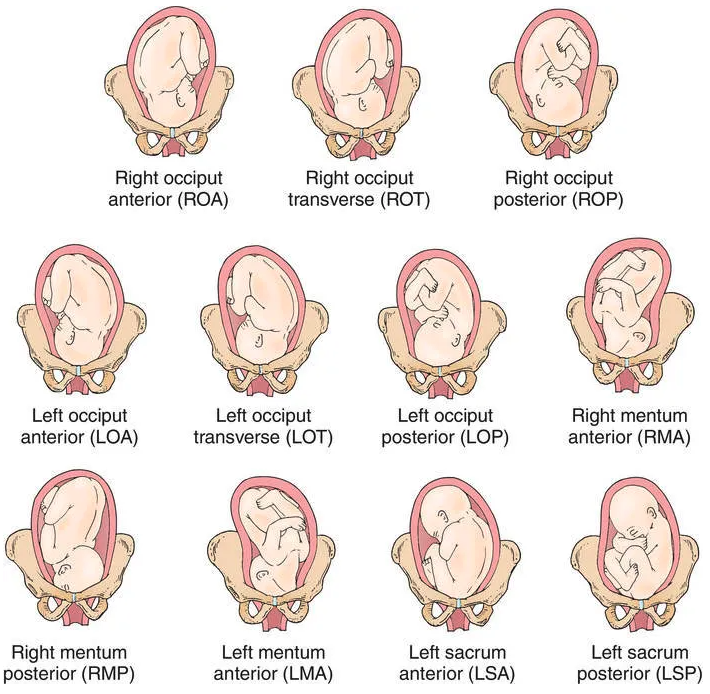
Check out these common in-utero positions.
Can you see how this might lead to some tension?
Lowdermilk, Deitra Leonard, et al. Maternity &
Women's Health Care. 12th ed., Elsevier, 2020
What does tension have to do with tongue tie?
To be clear, it’s completely normal to have connective tissue that attaches the tongue to the floor of the mouth. A tongue tie only exists when there is a functional concern, which present as an inability to feed, move, or function optimally. However, if we’re having concerns with feeding, moving, pooping, and/or thriving, jumping to the conclusion that there's a tongue tie that needs to be released isn't exactly the gold standard. Addressing tightness, preferences, and dysfunctional patterns can also improve feeding - sometimes to the point that a release is no longer needed. This is why many dentists and ENTs require bodywork PRIOR to a release or even an evaluation.
Body tension and its accompanying compensations can restrict mobility and affect the natural coordination of muscles, including those involved in feeding. This connection between body tension and breastfeeding challenges is often overlooked or misunderstood, but it is an important factor to consider. By addressing the underlying body tension, parents can potentially resolve functional concerns such as feeding difficulties with gentle, relaxing therapies!
How unresolved body tension can mimic tongue tie symptoms
You’ve likely heard the phrase, “everything is connected,” and well, it is! Fascia is intertwined throughout the body and connects, yet separates quite literally everything that makes us tick. Let’s say, for fun, you weren’t able to bend your ankle when you walked. Do you think, that over time, your knee might start to bug you, then maybe a hip would start feeling a little twinge-y, and then well, your shoulder might start to cave in a bit on one side to keep you level as your body starts to shift to try to make up for that ankle that just isn’t holding its weight (quite literally). A similar series of events can happen to even the tiniest of little squishes. If your precious little newborn was born in a hurry, maybe took their sweet time making their arrival, or even had some assistance via a C-section or a vacuum, their little body could be holding some tension that can create some up/down stream effects.
If baby can’t lift their chin up/tilt their head back comfortably - that’s going to impact their ability to feed.
If baby can’t turn their head comfortably to one side - that’s going to impact their ability to feed.
If baby’s little bitty neck muscles are tight and pulling their chin down and in - that’s going to impact their ability to feed.
So, naturally, we look at why baby isn’t able to do one of their four jobs (feed, poop, sleep, and develop 😋) well. If we don’t consider tension (or other factors such as dysregulation, milk supply, feeding positions, etc.), we might be missing a BIG piece of the puzzle and jumping straight into releasing something that isn’t the main cause of tiny tot’s functional problem. When tension exists in other areas of the body, it can disrupt the coordination required for successful breastfeeding. By addressing this tension, parents can potentially improve their baby's feeding experience and avoid unnecessary interventions.
How do you rule out body tension vs. a tongue tie?
As said before, when it comes to determining if dysfunction is coming from tension or tongue tie, bodywork is both therapeutic and diagnostic. By working with a skilled and knowledgeable bodyworker and lactation consultant (or SLP, OT, etc.) FIRST, you can ensure that you are removing potential contributors to dysfunction. Once body tension and function have been assessed and addressed, there should be a better understanding of what is TRULY causing the dysfunction. While there could be a tongue tie, the functional concerns could also be coming from nerve or muscular dysregulation. During sessions, we analyze and address findings that commonly mimic the functional concerns caused by a tongue tie. These include, but are certainly not limited to:
Ability for baby to rotate their head over their shoulder to both directions, and bring their ear to their shoulder on both sides with ease
Ability for baby to extend their head backward (look up) comfortably
Symmetry of the body and movement patterns
Function of the mouth and jaw structures
Palate shape and any imbalances
Tension patterns throughout the body that may contribute to feeding, movement, and functional concerns
Airway concerns such as the inability to breathe through the nose, suction tongue to the roof of the mouth, etc.
FUN FACT: There are muscles that connect from the front of the neck to the jaw that can retract the chin and pull the chin down. This structural imbalance can mimic some of the concerns from a posterior tie! Many muscles of the tongue attach into the jaw, the cranial bones, and a bone in the front of the neck. Proper movement of the head and neck plays a HUGE part in how well the tongue and mouth function!
When we have a restriction in the neck, the temporal bone and cranium (styloid process, hyoid, mandible, palate, etc.) are impacted, which then in turn, impacts the function of the muscles of the mouth and jaw!
Tips for preventing and managing body tension
Bodywork therapies play a vital role in relieving body tension and promoting overall well-being. Techniques such as craniosacral therapy, myofascial release, and infant massage can help release tension in specific areas of the body, allowing for improved muscle coordination and function.
When it comes to breast and bottle feeding, bodywork therapies can be particularly beneficial. By addressing tension that impacts the structures related to feeding, these therapies can help improve latch, feeding on both sides, transfer efficiency, and so much more!
How to find the right provider for a tongue tie release
Dr. Dani is a Denver-based pediatric chiropractor with hundreds of hours of training, research, and continuing education specific to tongue tie. It is IMPERATIVE that you seek out a provider that has additional training in tongue tie AND infant bodywork. A provider stating that they sometimes work with babies likely isn’t going to provide the same in-depth assessment, explanation of symptoms, or understanding of feeding mechanics. Ask what additional training they’ve had!

Hi there!
My name is Dr. Dani and I’m an in-home chiropractor for busy women and infants within the Denver Metro area. I work with women of all ages and stages, but truly shine with the pregnancy, postpartum, and pediatric populations. I strive for quality care through extended appointment times, diverse treatment modalities, personalized home-care recommendations, and education so families can feel both empowered and cared for!
Questions? Comments? CONTACT ME
Need some bodywork? BOOK HERE
Have I helped you or a family member? LEAVE A GOOGLE REVIEW
Looking for the fun stuff? Instagram: balance.chiro.and.rehab
New here? Welcome! Check out more information about Dr. Dani and what Balance Chiro and Rehab offers to those in the Denver Metro area (and beyond) HERE.
Fun Little Disclaimers:
Affiliate Disclaimer. From time to time, Balance Chiro and Rehab (BCR) participates in affiliate marketing and may include affiliate links on some of our pages. This means that BCR earns a commission if and when you click on and make purchases via the affiliate link. We will inform you when one of the links is an affiliate link with an * indicator. Please note, BCR only recommends products or services that we believe will add value to you. However, it is your personal responsibility to conduct your own investigation into any affiliate offers and determine whether each offer is right for you or your business before purchasing.
Medical Disclaimer. The information on this Site, and available for download or purchase through this Site, is for information and educational purposes only. Nothing contained on this Site is or should be considered or used as a substitute for medical or any other professional advice, diagnosis, or treatment. Always seek the guidance of your doctor or other qualified health professional with any questions you may have regarding your personal health or a medical condition and/or on any opinions expressed within this site.
No Doctor-Patient Relationship. Your use of this Site and/or our products or services, including any implementation of any suggestions set out on this Site or in our products or services, does not create a doctor-patient relationship between you and Balance Chiro and Rehab (BCR).